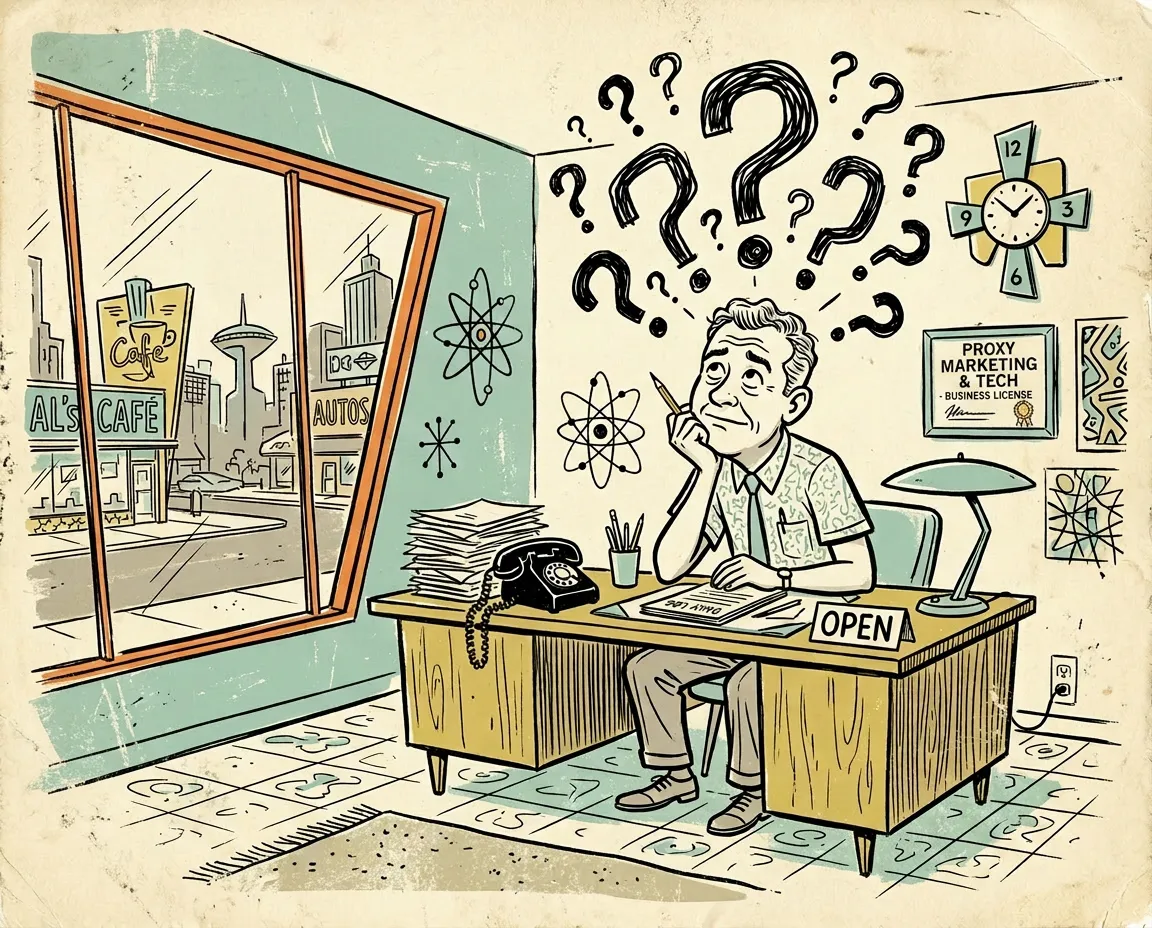
There’s a moment that happens in almost every client conversation around building a web app, or some other amazing concept. It usually sounds something like, “I have this idea…” and then what follows is either brilliantly simple or wildly undefined. Usually it’s both at the same time.
That’s where the real work starts. Let’s focus on the most common thing asked for – the web app.
From Idea to Production
Turning a client idea into something production-ready isn’t about immediately opening a code editor. It’s about interpretation. Most clients don’t speak in terms of architecture, scalability, or data flow for a web app. They speak in outcomes. They want more leads, better automation, cleaner workflows, or a new revenue stream. I had one client say, “I just need a way to track my drivers.” Excellent! My job is to translate that into a web app or some other software that actually works.
The first thing I focus on is stripping the idea down to its core function. Not the features they think they need, but the actual problem they’re trying to solve. A client might say they want a “platform” or a “web app,” but what they really need could be as simple as a gated landing page connected to a payment system and a follow-up sequence. Other times, it’s more complex, but starting simple is how you avoid overbuilding too early.
Once I understand the real goal, I start mapping the system. This is where experience matters. I’m not just thinking about what gets built, but how the tech evolves. Is this a one-off marketing tool, or does this have the potential to become a SaaS product later? Does the web app need user accounts? Does it need to scale? Does it need to integrate with third-party APIs?
These decisions shape everything that comes next.
Avoiding Web App Pitfalls
One of the biggest mistakes I see is choosing the wrong foundation. Not every project needs a heavy CMS, and not every web app should start as a fully custom application. I’ve built a lot of systems using a Git-to-Cloudflare workflow with static frameworks, and for the right type of deployment, it’s incredibly powerful. It’s fast, secure, and cost-effective. But it’s not the answer to every situation.
Sometimes WordPress is still the right call, especially if, say, a website needs content management. It’s fairly easy to handoff to a person unfamiliar with website builds. Other times, I’ll combine approaches, using a static front end with serverless functions or external services layered in for dynamic behavior. The goal is always the same: build only what’s necessary, but build in a way that doesn’t box the client in later.
More on Web Apps in Particular
Prototyping a web app has changed a lot in the last few years, especially with AI tools in the mix. What used to take days to get started can now be sketched out in hours. I’ll often use AI to accelerate early-stage builds or test ideas quickly, but I don’t rely on it blindly. Speed is useful, but structure is what makes a web app maintainable. There’s a difference between a web app that works today and a web app that can still function six months from now after iterations and added features.
As the project takes shape, I’m constantly thinking about how it connects to the rest of the business. A web app isn’t an isolated thing. It’s part of a larger system that includes marketing, analytics, customer data, and revenue tracking. If those pieces aren’t connected properly, the web app might look good on the surface but fail where it actually counts.
For example, a client might come in wanting a lead generation web app. On the surface, that sounds like a simple form and a landing page inside a website. But in practice, it becomes a system. There’s the front end experience, the data capture, the integration with email or CRM platforms, the follow-up automation, and often a monetization layer like Stripe built into it. Suddenly, what started as a “simple idea” becomes a structured web app funnel that can be measured, optimized, and scaled.
That’s the transformation I aim for with every build. Not just building something that works, but building structures that perform.
Knowing when to Guide
Another key part of the process is knowing when to push back on an idea. Not every web app should be built the way it’s originally described. Sometimes clients come in with assumptions based on tools they’ve seen or used before, and those assumptions don’t always lead to the best version. Part of being effective in this space is being willing to challenge those assumptions and guide them in a better direction.
That doesn’t mean overcomplicating matters. In fact, it usually means simplifying it. The best web app systems I’ve built are the ones where we removed unnecessary layers and focused on what actually drives results.
Once we move into production, the focus shifts to stability and performance. Clean deployments, reliable hosting, and efficient code all matter, but so does visibility into how the web app performs. If you can’t track what users are doing inside your web app, where they’re coming from, and how they’re converting, you’re missing half the picture. Every web app should be measurable from day one.
Over time, the real value shows up in how easily it can adapt. New features, new integrations, new campaigns. If the foundation is solid, those changes are straightforward. If it’s not, even small updates to the web app become painful. Note: I’m looking at you, vibe coders!
That’s why I approach every project with a long-term mindset, even when we’re moving quickly in the short term.
At the end of the day, turning an idea into a working web app isn’t just about development. It’s about translation, structure, and strategy. It’s about knowing how to take something abstract and shape it into something that supports real business outcomes.
Bring Your Ideas to Proxy Marketing & Tech
If you’ve got an idea you’ve been sitting on, whether it’s fully formed or just a rough concept (web app, siftware, anything really!), that’s exactly where this process begins. You don’t need to have all the answers. You just need a starting point, and we want to hear about it.