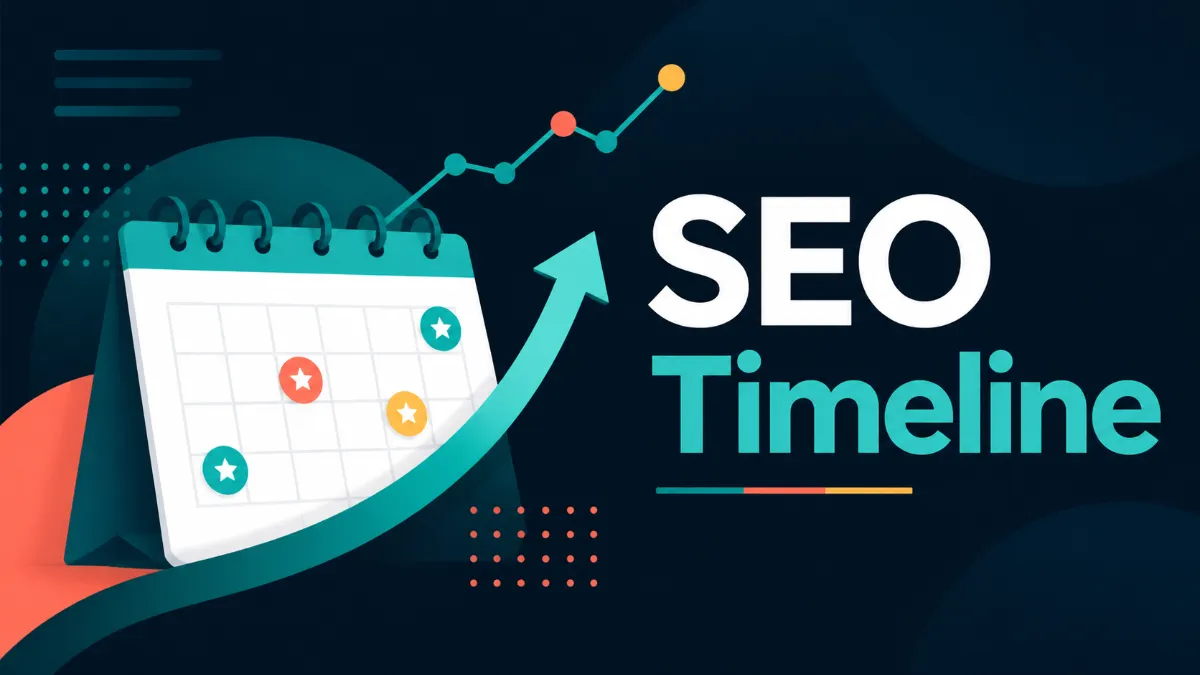
Understanding the typical SEO timeline can feel a bit like staring down a dark tunnel: you know there’s light at the end, but you want to know exactly when you’ll step into it – and whether the journey is worth it. The truth is, the timeline is more predictable than it looks from the outside, especially when you understand the stages, milestones, and levers you can pull to speed things up.
Why the SEO timeline matters more than you think
If you’re serious about organic growth, your timeline isn’t just an abstract “wait and see” concept – it’s a planning tool. It shapes your budget, your sales projections, your content roadmap, and how you communicate expectations to your team or clients.
Think of SEO less like a slot machine and more like compounding interest. In the early days, the numbers don’t look like much. But if you commit to a focused strategy, those incremental gains start stacking into something that actually moves pipeline and revenue, not just vanity traffic.
For high-intent readers – the founders, CMOs, and marketing leaders who care about real pipeline – understanding the SEO timeline lets you make confident decisions: when to invest, when to double down, and when to pivot. It’s how you avoid both impatience and complacency.
The real answer: how long SEO actually takes
No fluff: most brands start seeing meaningful SEO movement within 3–6 months, with stronger, more defensible results in the 6–12 month range. That range widens or tightens based on competition, domain history, content quality, and how relentlessly you execute.
Here’s a practical way to view the SEO timeline:
- 0–4 weeks: Indexing, foundational fixes, early signals
- 1–3 months: First keyword movement, early wins, technical stabilization
- 3–6 months: Noticeable traffic lift, better rankings on lower and mid-competition terms
- 6–12 months: Stronger authority, more consistent leads, competitive rankings for core terms
- 12+ months: Category leadership, content moat, compounding ROI
- Those aren’t promises; they’re realistic benchmarks you can plan around. When your timeline is anchored to these phases, you can judge progress by the right metrics at the right time, instead of obsessing over page-one rankings on day 30.
Phase 1 (Weeks 1–4): Getting SEO out of the starting gate
The first few weeks aren’t glamorous – but they’re absolutely pivotal to your SEO timeline. This is where you set the rules of the game for everything that follows.
Typical focus in this phase includes:
- Technical audit and fixes: crawlability, indexation, site speed, mobile readiness, basic Core Web Vitals
- Analytics and tracking setup: making sure every important action is measurable
- Keyword and intent mapping: aligning pages to the queries that actually drive revenue
- Competitive analysis: identifying who already dominates the conversation and why
- During this window, you’re unlikely to see huge traffic gains, but that doesn’t mean nothing is happening. Google is discovering and indexing content, testing your pages in low-volume queries, and forming its first impression of your site’s health and usefulness.
- If you already have a decent domain, you may see a few quick wins: small ranking bumps, impressions for long-tail terms, and crawl stats improving in Search Console. These aren’t the fireworks; they’re the fuse.
Phase 2 (Months 1–3): Early movement on the SEO timeline
Once your technical foundation is solid, the timeline shifts from “fix and prepare” to “publish, refine, and signal value.” This is where your early bets start to show up in the data.
In this 1–3 month window, expect work like:
- On-page optimization: title tags, meta descriptions, internal links, improved headings, better topical focus
- Content refreshes: upgrading existing pages to better match search intent and conversion goals
- Initial content expansion: launching core service pages, early blog or resource content, and supporting articles
- Early authority building: foundational link earning and brand presence
- Here’s the important nuance: around this point in your SEO timeline, rankings may look erratic. Pages jump from page 5 to page 2, then back down; some keywords appear overnight and vanish just as quickly. That volatility is normal. It’s Google effectively “test driving” your content in different positions and for different queries.
- For high-intent businesses, this is when you start watching leading indicators: more qualified organic leads, better engagement on key pages, and signs that you’re matching the right searchers with the right offers, even if you’re not dominating every SERP yet.
Phase 3 (Months 3–6): When the SEO timeline gets exciting
By month 3–6, the timeline starts to feel less like a bet and more like a strategy. You now have data, patterns, and clearer winners and losers in your content library.
This phase is typically where you see:
- Keyword rankings stabilizing around long-tail and mid-competition queries
- Noticeable growth in organic traffic, not just impressions
- Better click-through rates as you refine titles and meta descriptions
- Early compounding effects from internal links and external mentions
- Behind the scenes, your SEO roadmap should lean heavily into:
- Deep content creation around your core topics and offers
- Stronger topical clusters that tie articles, use cases, and solutions together
- Strategic link building and digital PR to reinforce your authority
- For B2B and other high-consideration businesses, this is often when organic search starts to drive real opportunities – demo requests, discovery calls, quote forms – not just newsletter signups. At this point in your SEO timeline, you’re no longer just being discovered; you’re being evaluated as a legitimate solution.
Phase 4 (Months 6–12): SEO timeline meets business outcomes
The 6–12 month stretch is where the timeline and revenue story finally collide. This is when the flywheel effect kicks in – the content you published months ago matures, trust builds, and your brand becomes the obvious answer for more queries.
In this phase, you’ll typically see:
- Consistent rankings for core commercial and category-level keywords
- Stronger brand searches and branded click-through rates
- A growing share of opportunities and deals influenced by organic search
- More defensible positions against both legacy players and new entrants
- The key advantage here is leverage. Instead of paying for every click, your content acts like a permanent sales asset that keeps showing up, educating, and qualifying. The SEO timeline at this stage reflects a shift from “Can we rank?” to “Where should we invest next to expand coverage and increase conversion?”
- For teams who have aligned SEO tightly with content, product marketing, and sales, this is also when you can credibly attribute meaningful pipeline and closed revenue to organic, not just “awareness.”
What actually speeds up your SEO timeline
SEO isn’t random, and your timeline isn’t a black box. Certain levers almost always shorten the distance between starting line and results when you use them intentionally.
The biggest accelerators include:
- Strong technical foundations: fast load times, clean architecture, clear internal linking, mobile-first UX
- Clear topical focus: ownership of a defined set of themes instead of scattered, one-off content
- Consistent publishing cadence: regularly shipping high-quality, intent-driven content
- Strategic internal linking: pushing authority from your strongest pages into newer, opportunity-rich assets
- Real authority signals: earned backlinks, brand mentions, expert authorship, and demonstrable experience
- When you align your SEO timeline with these accelerators, you’re not just “doing SEO”; you’re building a system. Each new page doesn’t start from zero – it plugs into an existing ecosystem of relevance and authority. That’s how you compress months of waiting into weeks of measurable movement.
What slows your timeline down (and how to avoid it)
On the flip side, there are reliable ways to sabotage your own SEO timeline. They’re more common than most teams want to admit, and they rarely show up as one big mistake – they creep in through small compromises.
Common timeline killers include:
- Constant strategy pivots: changing direction every 30–60 days before you have enough data
- Inconsistent content: publishing a burst of posts, then going dark for months
- Thin, generic content: surface-level posts that never become the best answer for any query
- Technical neglect: unresolved crawl issues, bloated scripts, broken internal links, unoptimized templates
- Misaligned intent: creating content that ranks but doesn’t convert, and never fixing the gap
- The danger is that these issues don’t always tank rankings immediately. They just quietly stretch your timeline, so what could have taken 6–9 months drifts into an 18-month grind.
- High-intent teams don’t just watch traffic; they audit the timeline itself. If you’re not seeing movement where you should – for example, no keyword traction after 3–4 months on well-optimized content – it’s a signal to investigate, not a reason to abandon ship.
The SEO timeline for different types of businesses
Not every timeline looks the same. A local service business, a niche B2B SaaS company, and a national e‑commerce brand are playing different games, even if they use similar tools.
Here’s how timelines typically break down by scenario:
- Local or niche businesses: Often see quicker traction (3–6 months) because competition is lower and intent is clearer. Local signals – like reviews, map listings, and localized content – boost momentum.
- B2B and high-consideration offers: Usually sit in the 6–12+ month band, because sales cycles are longer and decision-makers consume more content before reaching out. The upside is that ranking here tends to be extremely valuable.
- National or enterprise-level brands: Competing for heavyweight keywords often pushes the SEO timeline toward 12+ months, especially in saturated spaces. Authority and PR-style link earning are critical to accelerate results.
- Understanding which game you’re in lets you set realistic expectations. You don’t want to judge a long-cycle B2B SEO initiative by the same yardstick as a geo-targeted local campaign – the stakes, buyers, and signals are all different.
How AI search changes the SEO timeline (and why it’s good news)
AI-driven search experiences – from search generative experiences (SGE) to AI overviews and conversational engines – are rewriting how people discover and evaluate brands. That shift absolutely influences your SEO timeline, but not in the way you might fear.
In an AI-first search environment, three things matter even more:
- Depth and clarity of content: AI systems lean on pages that explain concepts thoroughly, answer nuanced questions, and align tightly with intent.
- Structure and context: Clean headings, FAQs, and clearly segmented sections help AI models understand and reuse your content in synthesized answers.
- Authority and trust: Experience, expertise, and real-world signals – case studies, reviews, bylines – make your content a safer bet for AI-generated responses.
- What does this mean for your timeline? When you create content that’s optimized for both traditional rankings and AI-driven answers, you expand the surface area where your brand can show up. You might see earlier visibility as your pages are pulled into AI summaries and answer boxes, even before you own the top organic listing.
- In other words, you’re not just racing for blue links anymore – you’re racing to become the source that both humans and AI systems trust to explain, compare, and recommend.
Making your SEO timeline work for high-intent growth
At this point, the timeline shouldn’t feel like a passive forecast. It should feel like a roadmap – a way to sequence your work so you get traction early while building toward the bigger, more competitive wins.
A high-intent, growth-focused plan often looks like this:
- Months 0–3: Fix the foundation, align analytics, and clean up technical debt. Publish or refresh core pages that map directly to revenue-generating offers.
- Months 3–6: Expand around those offers with supporting content, FAQs, comparison pages, and use-case narratives that match the research journey of your best buyers.
- Months 6–12: Double down on what converts. Scale winning content types, build deeper topical clusters, and invest in authority-building initiatives that cement your position.
- Throughout the entire SEO timeline, you’re not chasing traffic for its own sake. You’re filtering every decision through a simple question: “Will this help the right people find us, trust us, and choose us?” When the answer is consistently yes, the timeline doesn’t just lead to more visitors – it leads to more customers.
FAQs about the SEO Timeline & How Long SEO Takes
How long does it usually take to see SEO results?
Most businesses start to see early SEO results within 1–3 months, especially when they fix technical issues and optimize existing content, but meaningful, consistent gains typically emerge in the 3–6 month window. Competitive spaces, new domains, or ambitious keyword targets often extend the SEO timeline closer to 6–12 months or more, especially when you’re aiming for high-value, high-intent search terms.
Why does the SEO timeline take months instead of weeks?
The timeline stretches over months because search engines need time to discover, crawl, and index your content, then evaluate how users respond to it over many searches. Factors like competition level, domain history, technical health, and the pace of your content and link building all influence how quickly you move from being “just another result” to a trusted, high-ranking option.
Can I speed up my SEO timeline without sacrificing quality?
You can accelerate your timeline by combining strong technical foundations with a focused, consistent content strategy that targets clear, commercially relevant intent. Publishing high-quality, structured content around well-defined topics, reinforcing it with internal links and genuine authority signals, shortens the feedback loop between your efforts and visible results.
How does the SEO process relate to the SEO timeline?
The SEO process and the timeline are two sides of the same coin. The process is the work you do – audits, content, optimization, link building – while the timeline is when each stage of that work typically shows results. Early technical and on-page work shapes the first 1–3 months, deeper content and authority building drive progress at 3–6 months, and ongoing optimization turns into compounding growth in the 6–12+ month range.
How does domain age affect the SEO timeline?
Newer domains often face a longer SEO timeline because they have less historical trust, fewer backlinks, and minimal behavioral data, so search engines are cautious about ranking them aggressively. Established domains with a history of quality content and good user engagement generally see faster movement, since they’re already known quantities in the index.
Does AI-powered search make SEO faster or slower?
AI-powered search doesn’t inherently shorten or lengthen the SEO timeline, but it changes where and how your work pays off. When your content is deeply informative, well-structured, and backed by real authority, it’s more likely to be surfaced in AI-generated overviews and conversational answers, which can create earlier visibility even before you fully dominate traditional rankings.
What should I measure at each stage of the SEO timeline?
In the early weeks of your SEO timeline, focus on crawling, indexation, and baseline rankings to confirm your technical foundation is solid. From months 3–6, shift to tracking qualified organic traffic, engagement on key pages, and conversion actions, then from 6–12 months onward, judge success by pipeline, revenue influence, and how reliably organic search delivers sales-ready opportunities.